
• About
    • About Alden Kindred of America
    • Staff And Board of Directors
  • Membership
    • Become a Member
    • Membership Renewal
    • Lineage Certification
  • Building Campaign
  • Explore
    • Kids
    • Teachers
    • Archaeology
  • Virtual
  • Shop
  • Events
  • Visit
    • Hours & Directions
    • Self-Guided Tour
    • Pilgrim Quest
    • Other Duxbury Sites
  • Contact
  • Support Us
  • About
    • About Alden Kindred of America
    • Staff And Board of Directors
  • Membership
    • Become a Member
    • Membership Renewal
    • Lineage Certification
  • Building Campaign
  • Explore
    • Kids
    • Teachers
    • Archaeology
  • Virtual
  • Shop
  • Events
  • Visit
    • Hours & Directions
    • Self-Guided Tour
    • Pilgrim Quest
    • Other Duxbury Sites
  • Contact
  • Support Us
  • Alden First Site
  • History of the First Site
  • Daily Life at the First Site
  • Archaeology
  • What? Micromorphology
  • When? Dendrochronology
  • Where? Geographic Information Systems
  • See the Artifacts
  • For Kids
  • Activities
  • Additional Resources

See the Artifacts

Click on each image to learn more about some of the artifacts recovered from the First Home and what they can tell us about the Aldens’ lives there.

Ceramic Vessels

These sherds are similar to a wine cup found at Jamestown dating from the early years of the settlement. If John and Priscilla owned this cup, it would have shown off their wealth and status to visitors.
These sherds are remarkable in that they display the potter’s fingerprints. While this would not have been one of the Aldens, these are a direct connection with someone else who lived long ago.
Pitchers often held wine, beer, or other alcoholic drinks. These were then poured into individual mugs or tankards.
This jar was likely used to hold provisions such as oil, beans, or wine. These were essential for the large Alden family, especially during harsh Massachusetts winters. The deep cellar within the First Home would have been an ideal place to store them.
This was likely the base piece of a mug. These were used as individual drinking vessels as opposed to communal jars and pitchers.
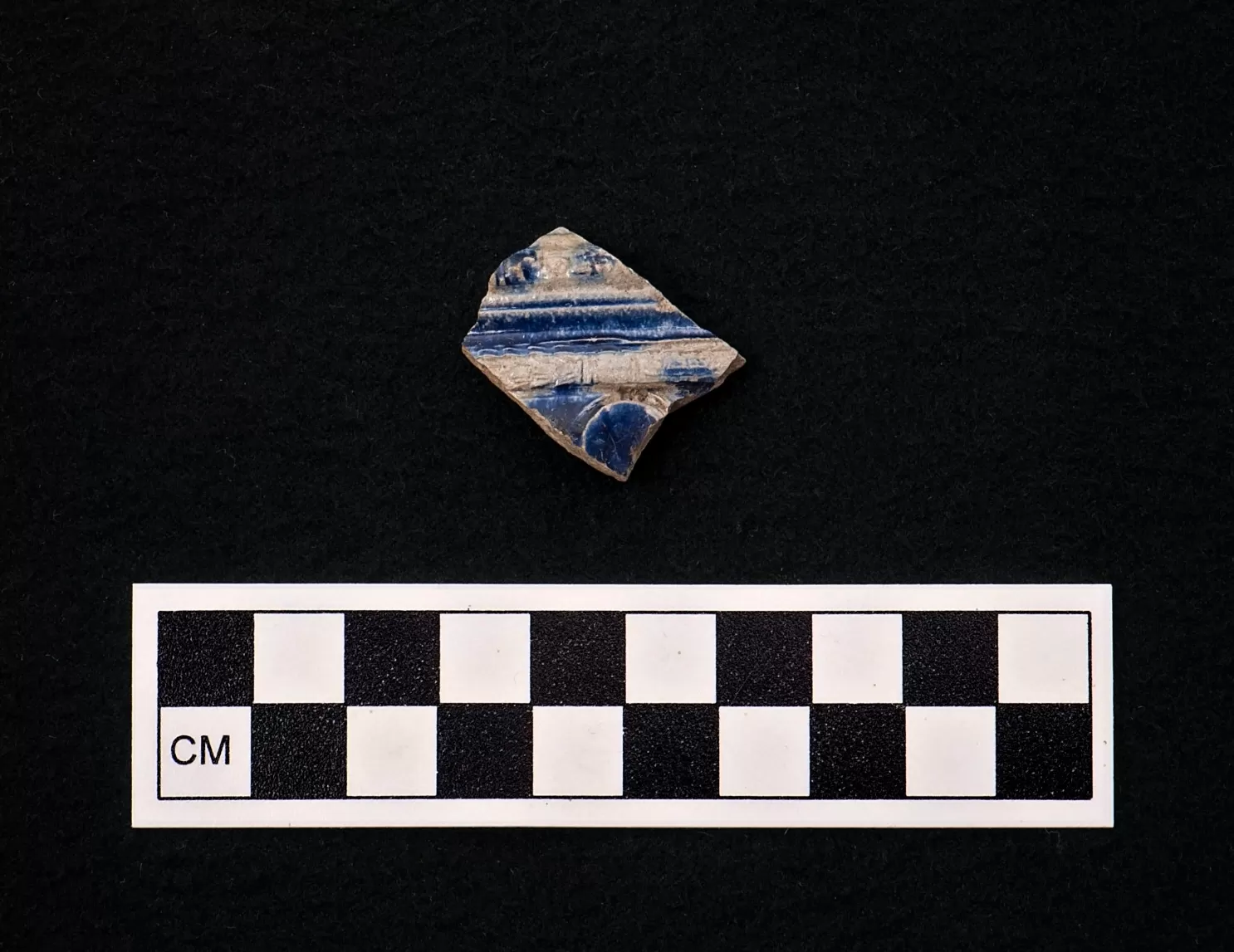
This small Rhenish stoneware piece is from a was likely from a mug or tankard used to consume beer or ale. It was manufactured in Germany and traded with the English. The Aldens either brought this vessel with them aboard the Mayflower or received it from a later supply ship.
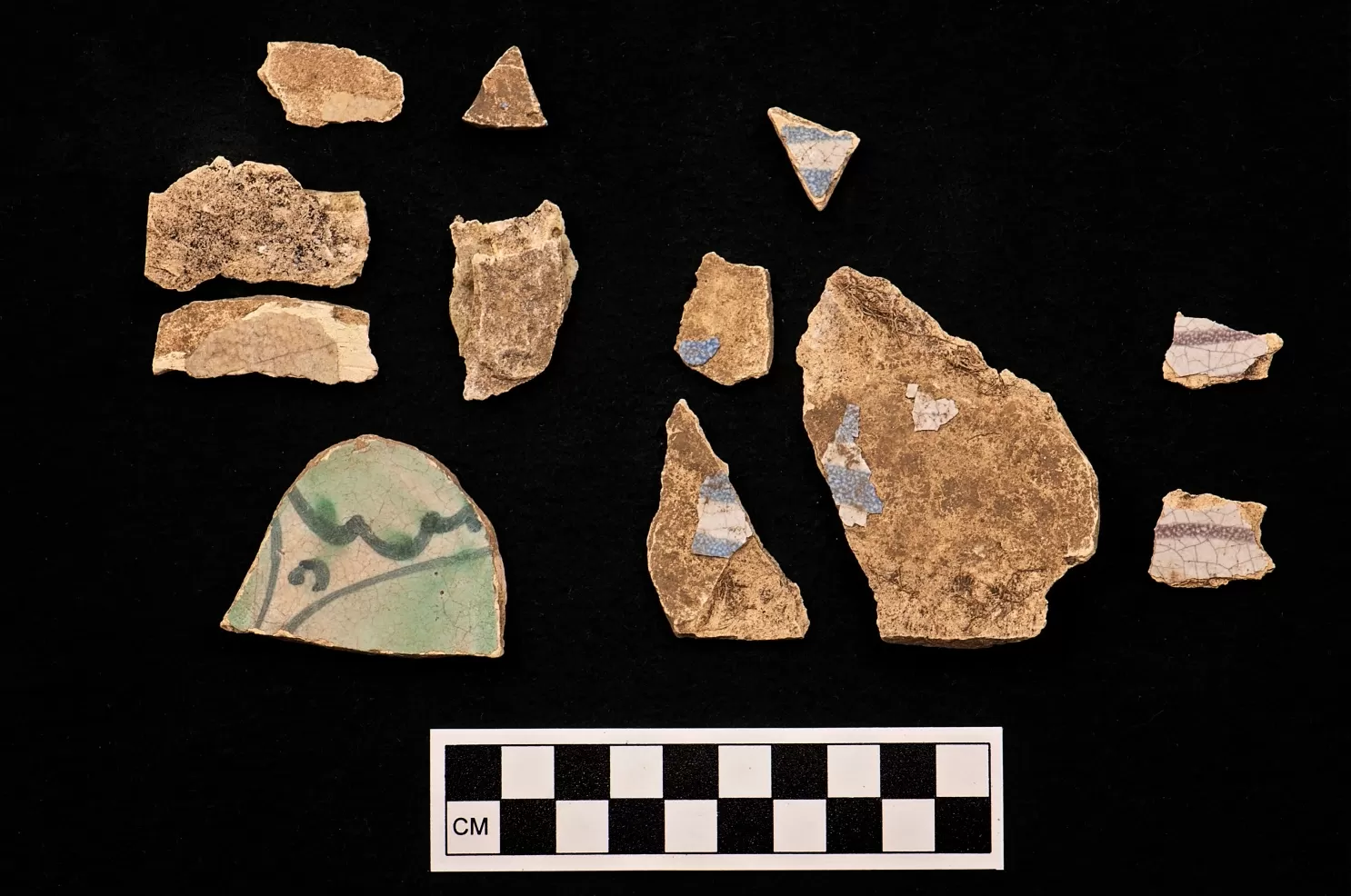
These vessels were used for serving vessels, other tablewares, or display. It is uncertain at this time whether these are English, Spanish, or Italian vessels.
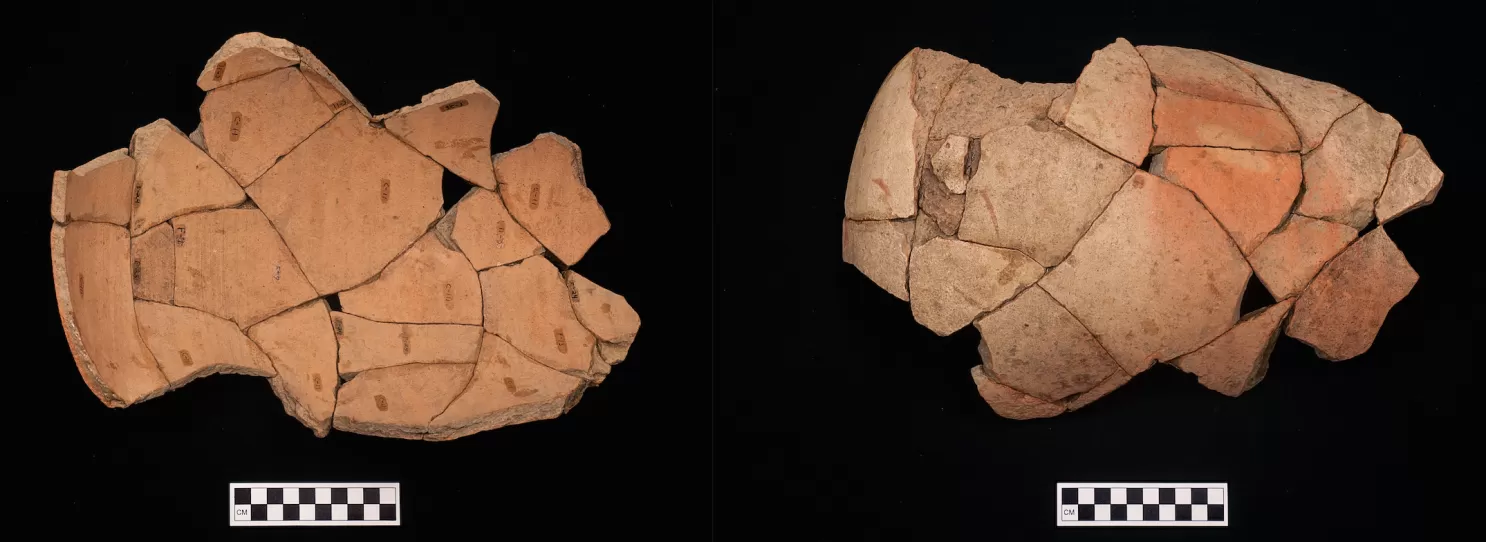
This sherd is likely a piece of a Native American vessel. It is uncertain as to when this vessel dates from. It could have been used by Native peoples before the Aldens inhabited the land. It could also be a clue to the interactions between the colonists and Native Americans. John’s job as a land agent could easily have led to Native objects being found near his home. Finally, this piece could also have been left at the First Home after the Aldens moved away, either by Native peoples themselves or by land development projects that moved and mixed the soil.

Glass Artifacts

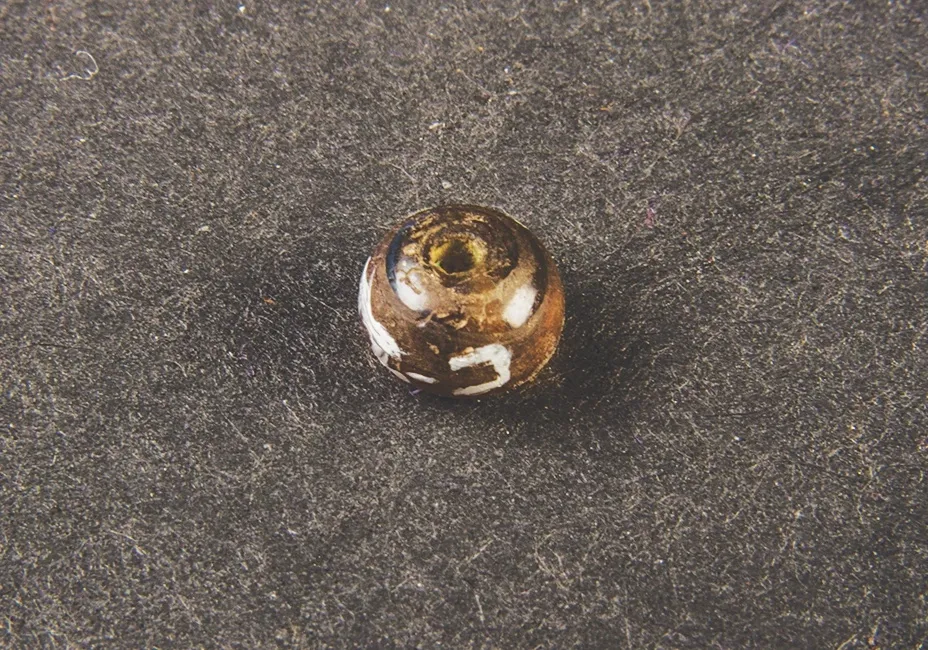
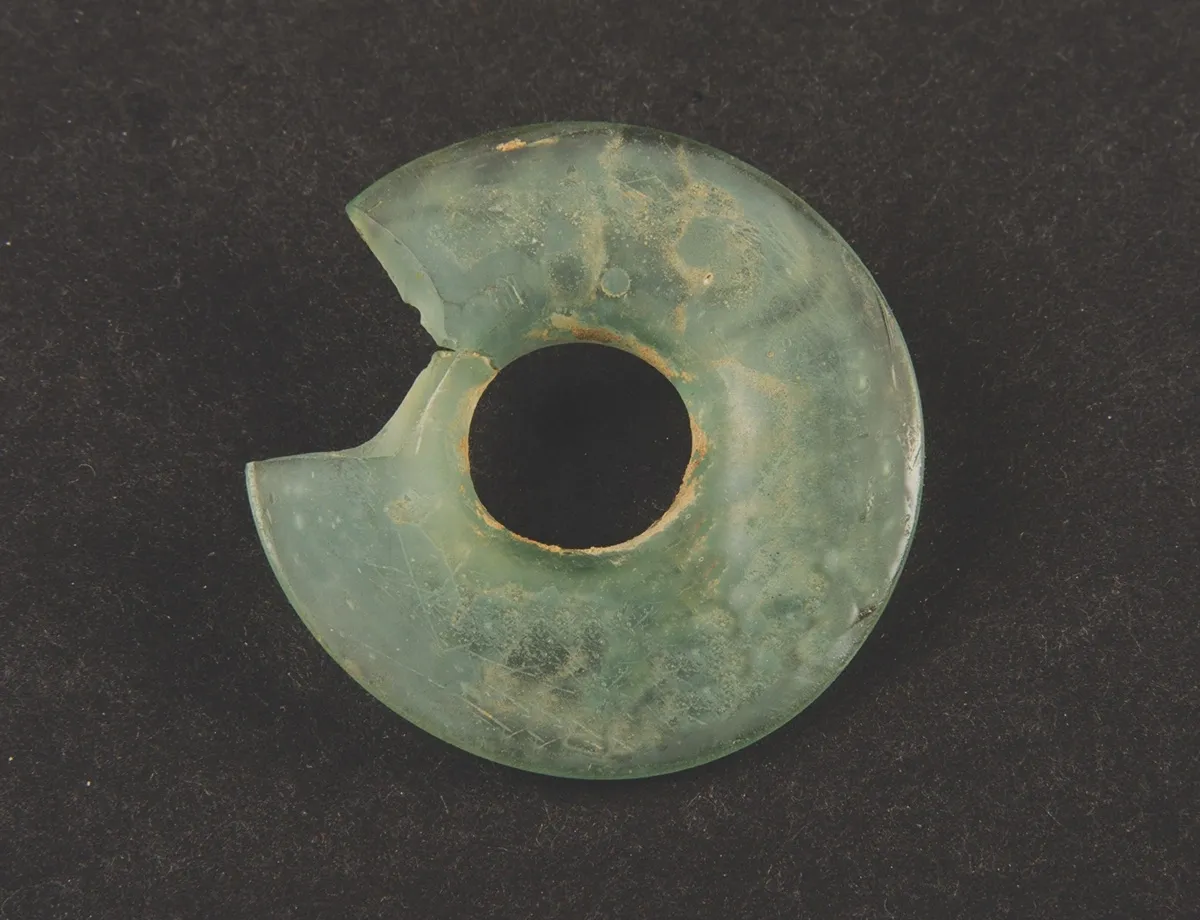
Small, colorful glass beads like this one were common trade items offered by European colonists to Native Americans, especially for furs.
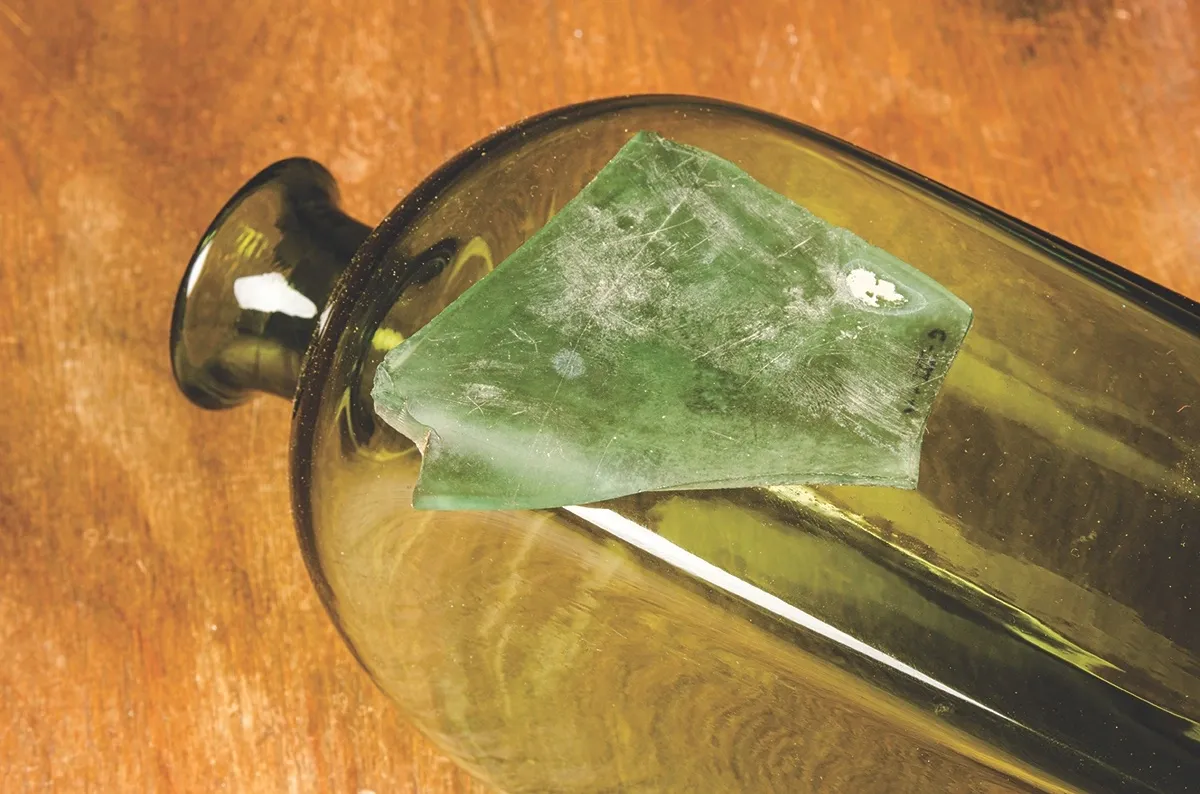
Square bottles of green glass were made to be easily transported. The bottles were placed inside wooden boxes with dividers for safekeeping.
This is the top to a medicine phial. Small glass bottles were made for doctors, apothecaries, and household use in a variety of forms and for a range of uses.

Metal Artifacts

Gun forks were placed inside the top of a wooden pole and attached with a ring or iron. The heavy musket was then rested and balanced on the gun fork, enabling better accuracy for the shooter.
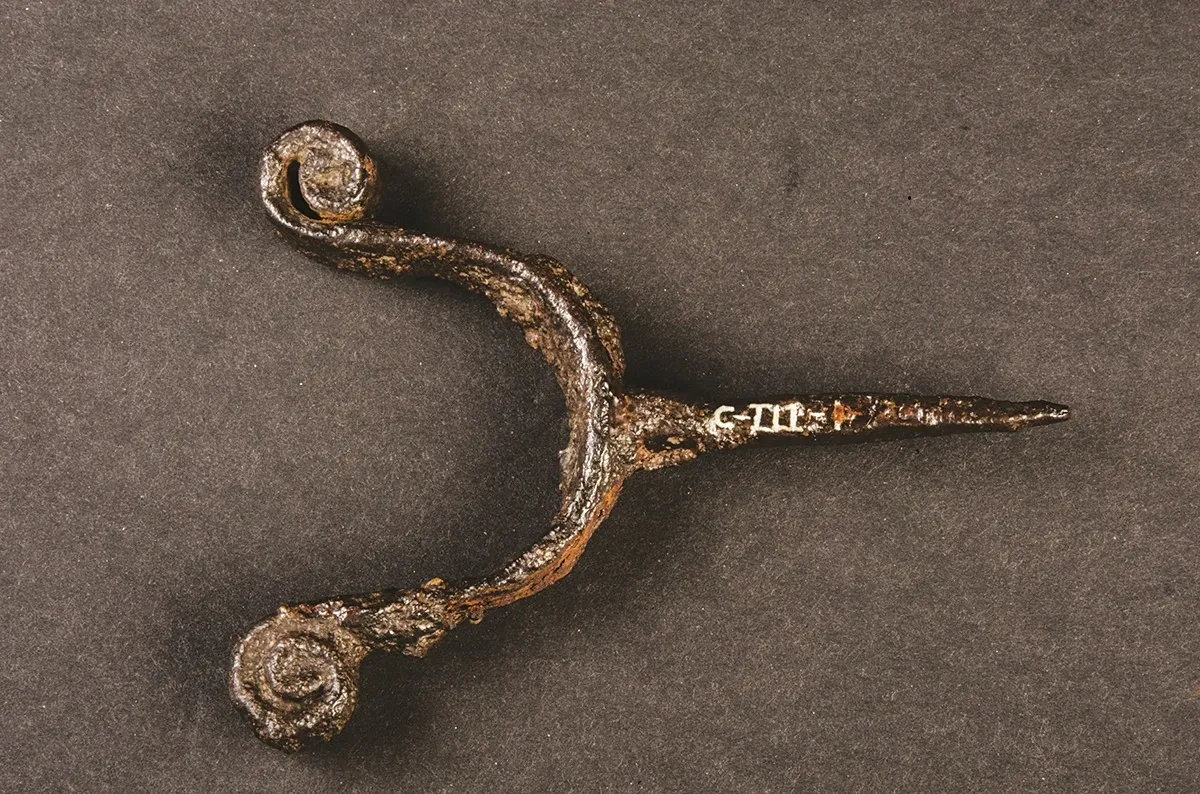
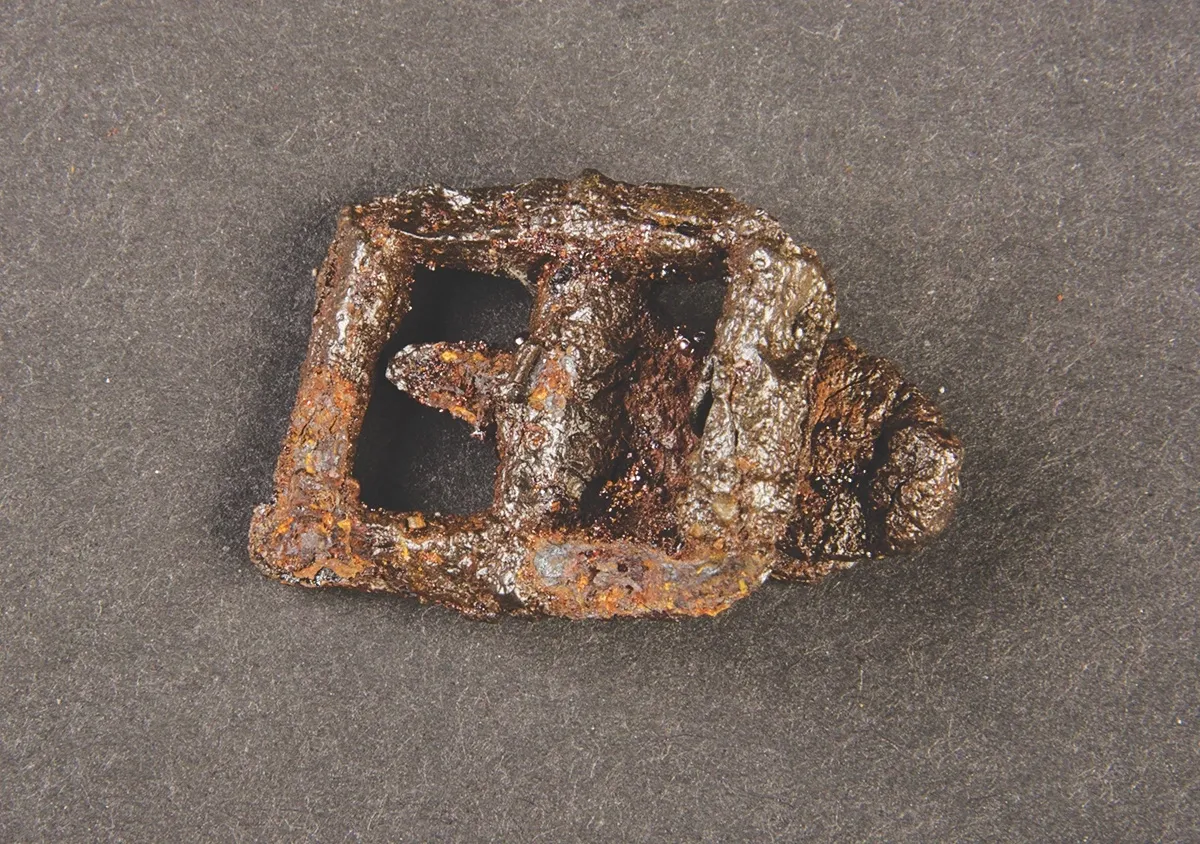
This is possibly a spur buckle used to attach spurs to boots for horse riding. It could also have been for the horse’s bridle.
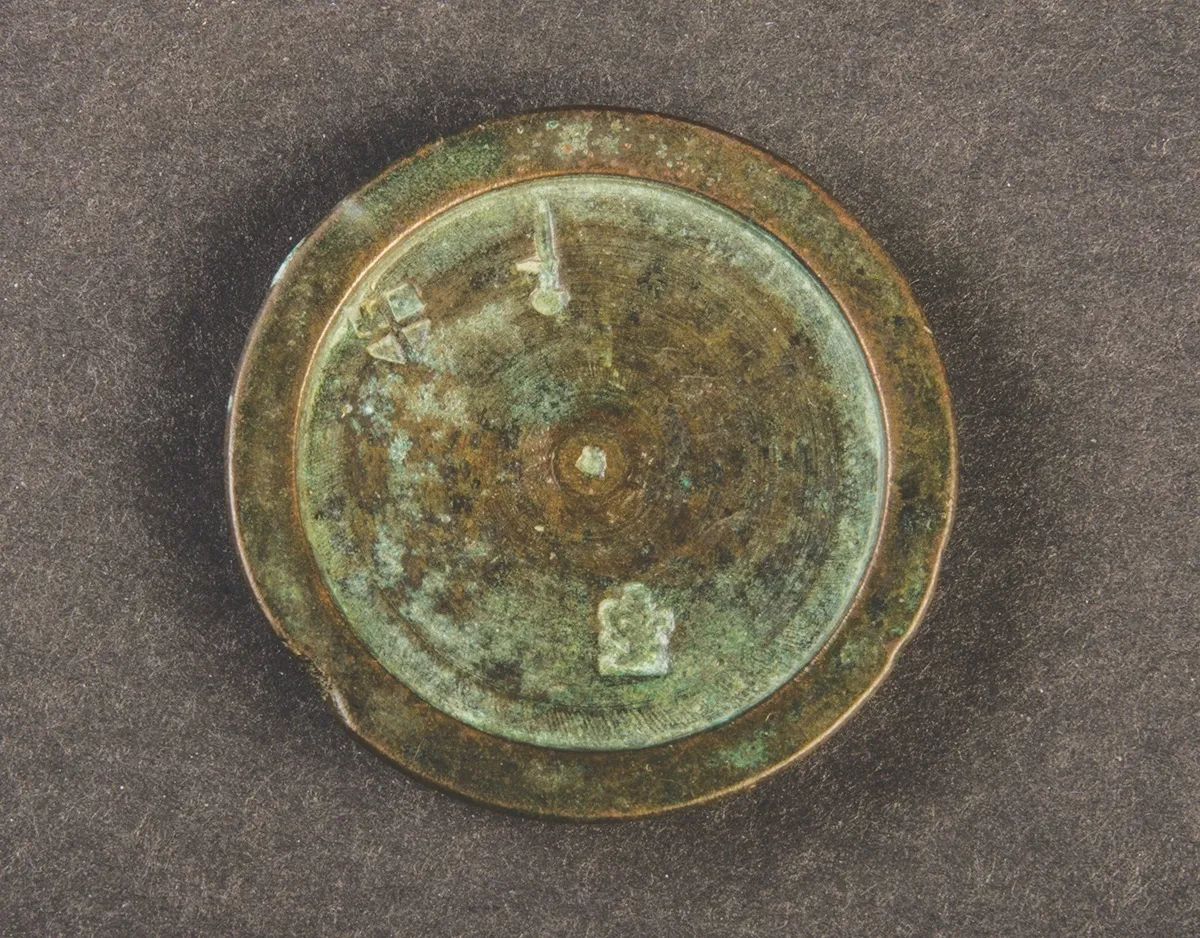
This small bronze weight was used for weighing items on a scale. Steelyards are a portable weighing scale with a graduated beam, weight, and hooks.
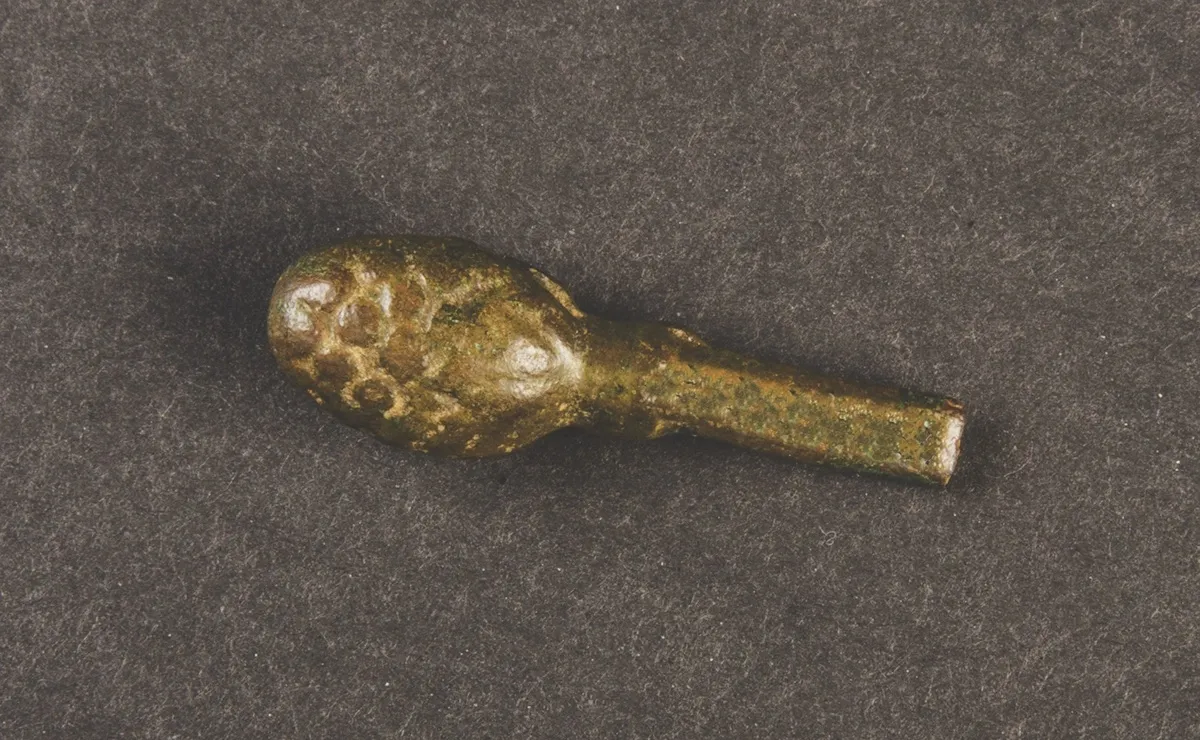
This is a “strawberry” knob spoon handle top, dating from c. 1600-1625. It is unusual because most latten spoons commonly had “seal tops,” with a flat terminal end.
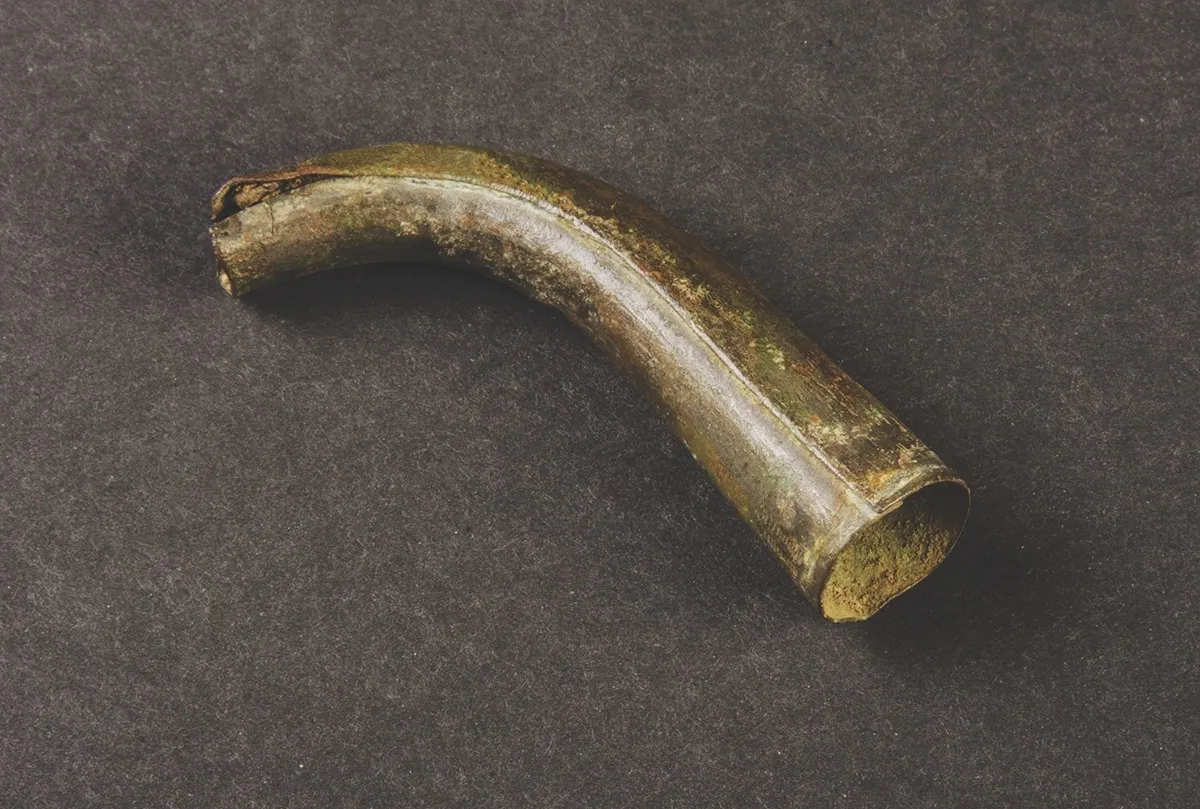
This brass spout is most likely from a small kettle. Kettles made of copper, iron, or brass were needed for boiling water to add to cereal grains like oats, rye, or corn to making porridges and gruels, staples of the 17th-century diet.
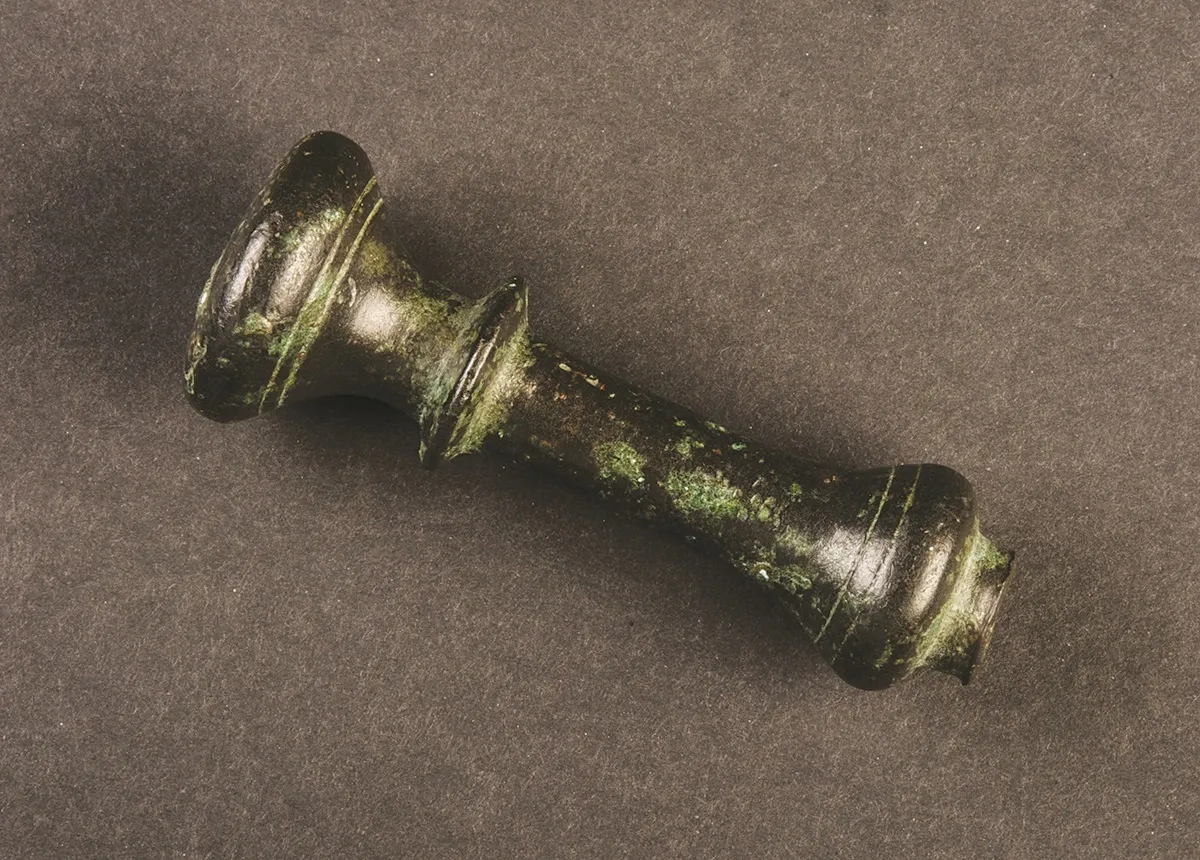
This is a handle of a pestle for use with a mortar for grinding spices, herbs, fruit, nuts, other food items, or medicine.
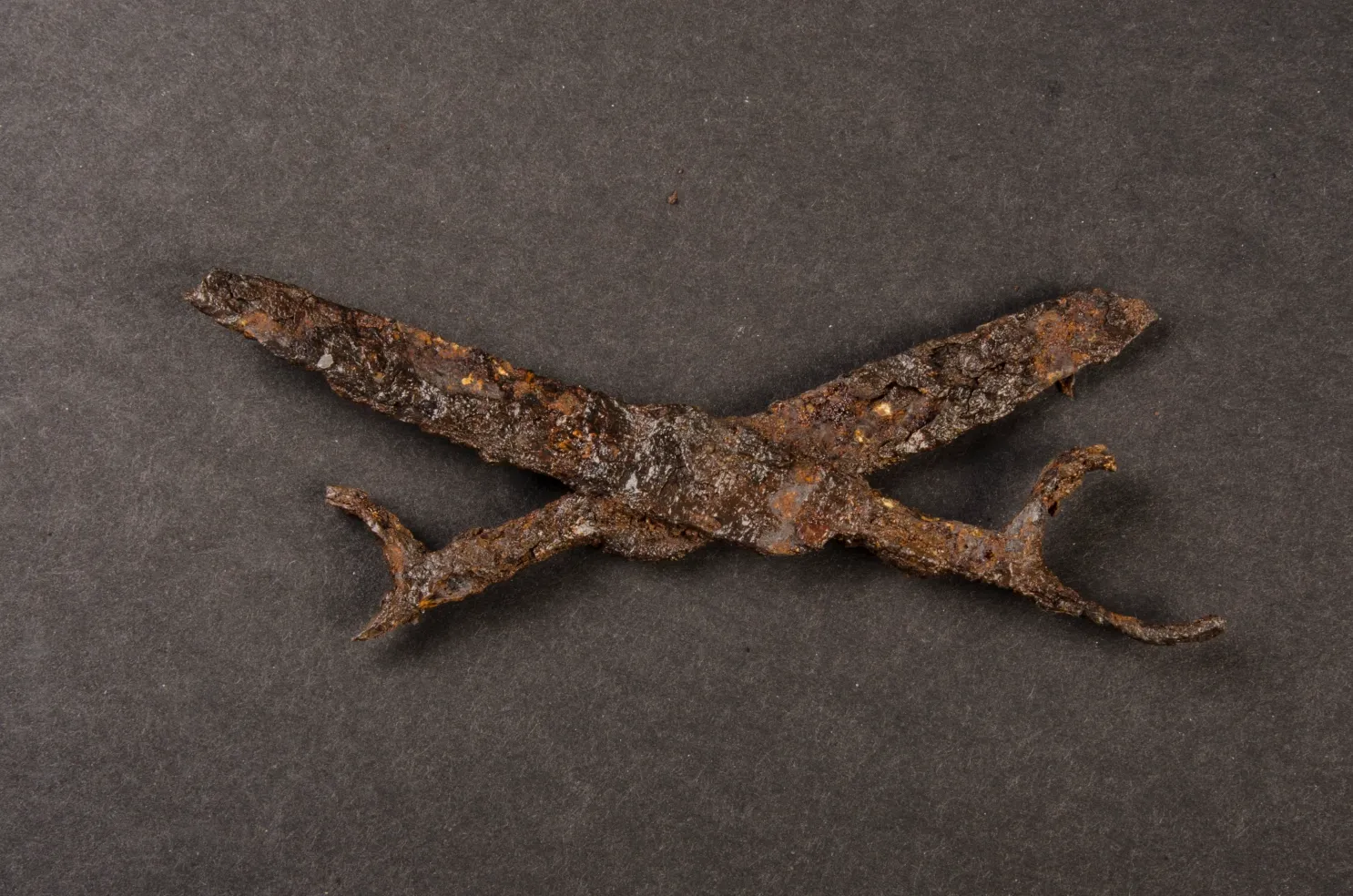
Sewing items like scissors, thimbles, pins, needles, and thread were common household items in 17th-century Plymouth Colony.
dsc_0211-1

Other Artifacts

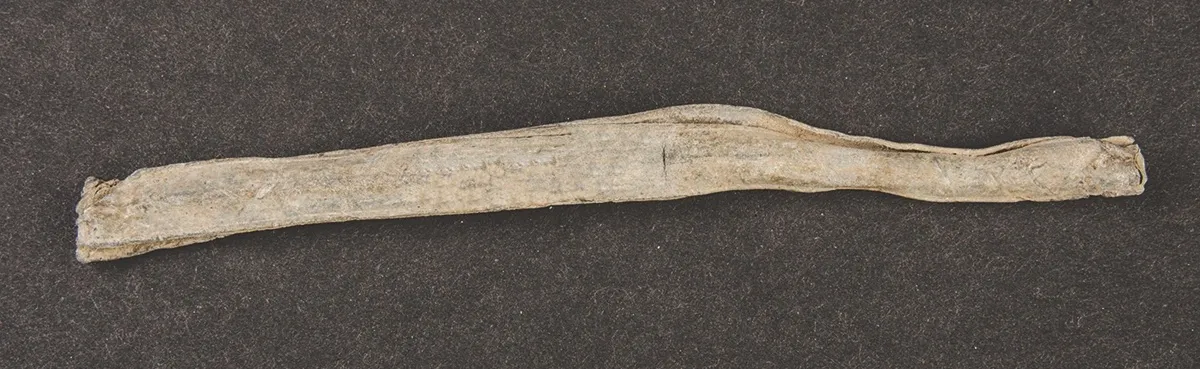
This strip of lead is known as a “came.” These pieces held the glass panes of casement windows together.
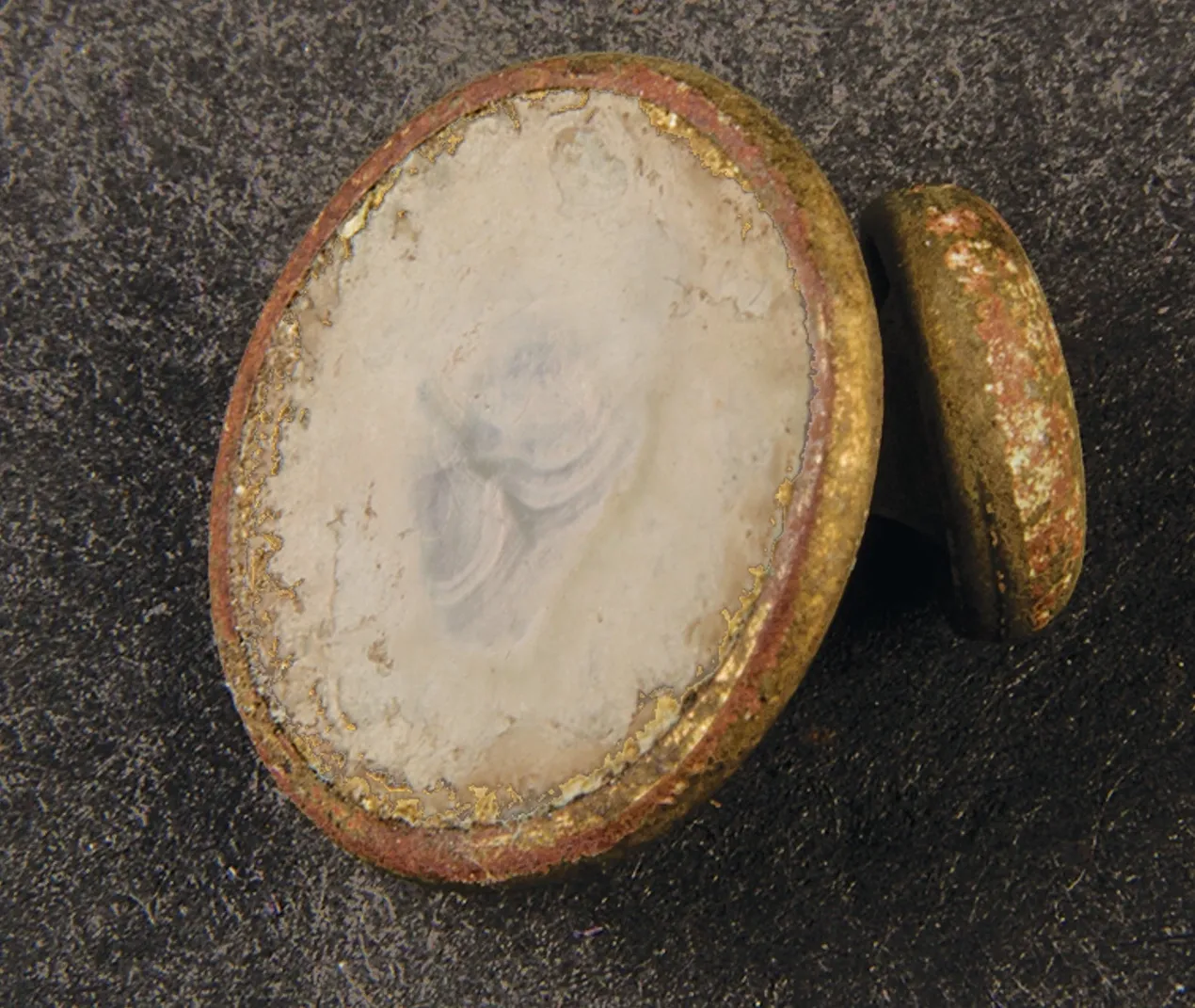
This is a small brass button or stud (possibly from a shirt) with mother-of-pearl inlay. Buttons made from gold or silver were often status symbols.
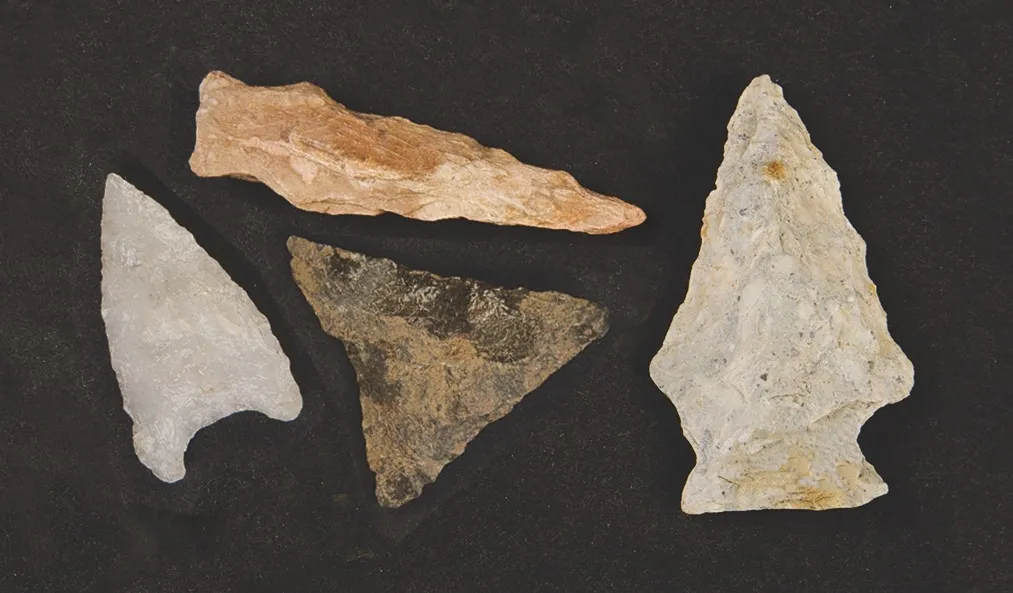
These stone projectile points indicate previous Native American occupation of the Alden Homesite land. Recovered Native artifacts range from 1000 BP (Before Present) to the 17th-century Contact Period.
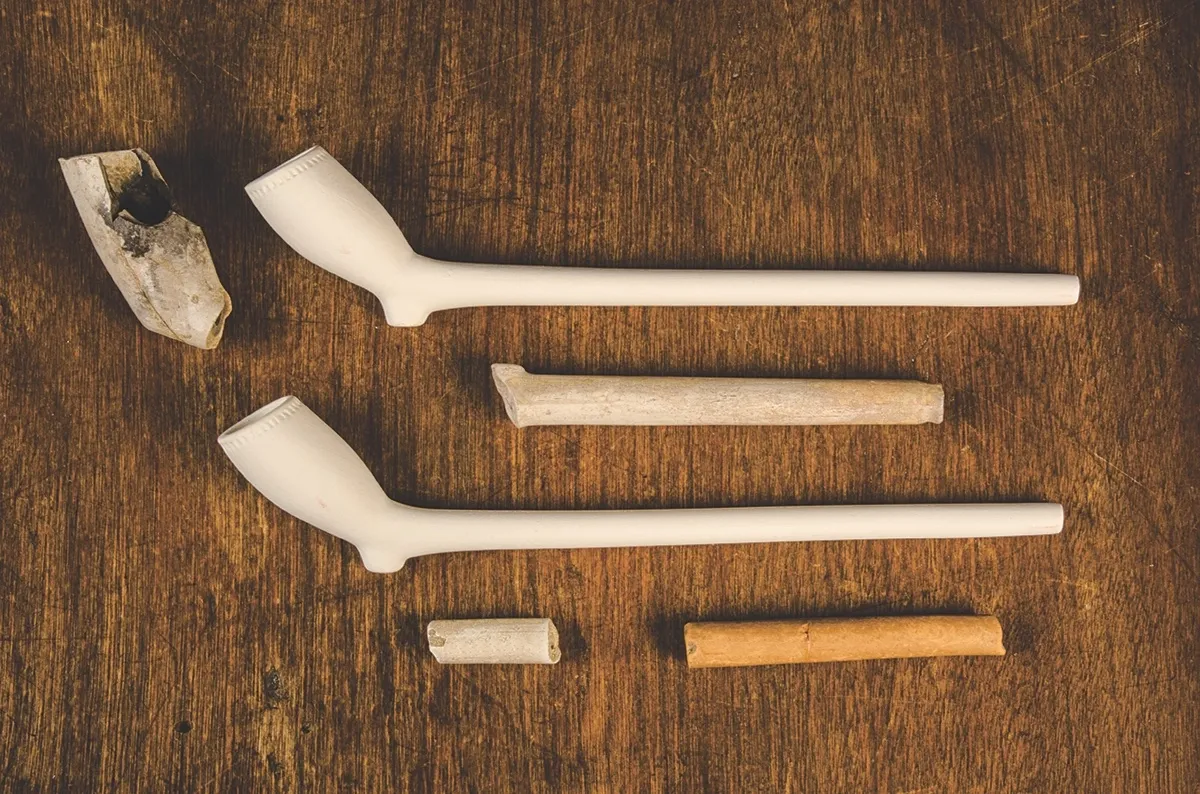
Clay pipes for smoking tobacco changed size with such regularity over the years that they can be used to help date an archaeological site. Both men and women smoked tobacco in 17th-century Plymouth Colony.

Our Mission

The Alden Kindred of America honors the Alden family and the Pilgrim spirit through preservation of the Alden Historic Site and celebrates its legacy through education, exhibits, genealogy, programs, research and publication.

Contact

Phone: 781.934.9092
Email: info@alden.org

Copyright 2025 Alden Kindred of America

  • Follow
  • Follow
  • Follow